
Kensington and Chelsea council plans £19.1m from reserves to rebuild its IT after the November 2025 cyber attack. Running costs would rise by £2.4m a year.
Overview
Kensington and Chelsea council plans to spend £19.1 million from its reserves on rebuilding its technology after the cyber attack of November 2025. Yearly running costs would rise by £2.4 million by 2028/29.
The figures are in the council’s Medium Term Financial Planning report to its Leadership Team on 11 November. Councillors on the Overview and Scrutiny Committee examine them in public on Wednesday 18 November.
What the money is for
The report says reviews after the attack found the council needed to protect its operations, improve recovery arrangements and replace systems near the end of their life. It also cites “historical underinvestment in technology”.
The investment covers:
- cyber resilience
- data governance
- modernising the council’s IT infrastructure
- replacing older systems
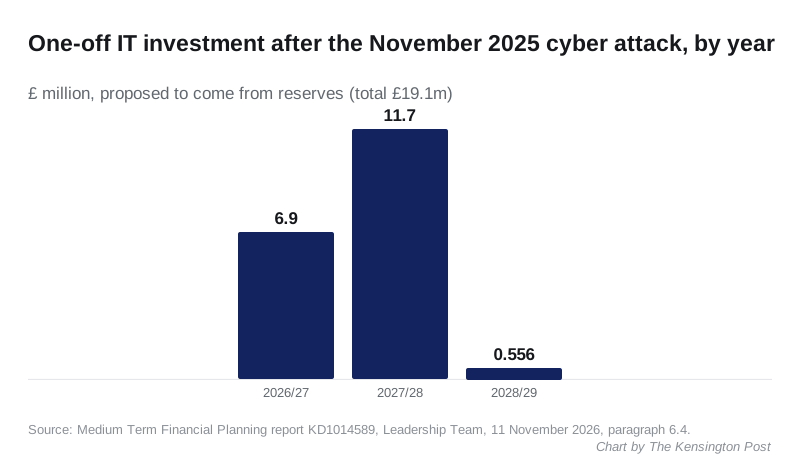
The £19.1 million is a one-off sum spread over three years:
| Year | One-off investment |
|---|---|
| 2026/27 | £6.9m |
| 2027/28 | £11.7m |
| 2028/29 | £556,000 |
On top of that, the report adds recurring spending of £2 million in 2027/28 and a further £350,000 in 2028/29. The council’s FAQ on the attack says it already spends more than £12 million a year on IT and security.
Where the money comes from
The report asks the Leadership Team to agree £19.1 million “of funding from reserves”. It adds that “final funding arrangements are still being confirmed”.
The report does not play down the cost. It says the investment “increases short-term financial pressures”. It also says that not going ahead would expose the council to “significant operational, financial, and reputational risks”.
The council’s reserves are already lower than they were. The same report says they “have reduced significantly in recent years”. It names four causes: the Grenfell tragedy, the Covid-19 pandemic, the cost-of-living crisis and the cyber attack.
A second request asks for £13.2 million from reserves for the council’s K&C 2030 transformation programme. The report says that money would be paid back from savings the following year.
The report also lists “the longer-term financial implications of the Council’s cyber recovery programme” among costs it cannot yet put a figure on.
What scrutiny councillors will see
The Overview and Scrutiny Committee paper for 18 November puts the recurring digital spending at £2.391 million across the two years. It also removes a separate £700,000 set aside for the cyber incident and folds it into the larger IT budget.
The committee meets at 6.30pm at Kensington Town Hall. The agenda is on the council’s website.
The council has not yet published the formal decision record from the 11 November meeting. The budget consultation the report asked for opened the next day.
The attack, a year on
The council discovered unusual activity on its systems on the morning of Monday 24 November 2025. The attack also hit Westminster and Hammersmith and Fulham councils, which share IT systems with Kensington and Chelsea, according to the council’s FAQ.
In a data update on 16 March, the council said some resident data had been copied. It reported the breach to the Information Commissioner’s Office. It wrote to more than 100,000 households.
On 1 July the council said 94 per cent of its systems were back online. It expected full recovery by the end of the summer and hoped to clear service backlogs by the end of 2026.
What it means for you
The IT money is proposed to come from reserves, not straight from next year’s council tax bill. The council tax decision is separate: Full Council sets it in March 2027, and the council is consulting on rises of up to 70 per cent.
You can comment on the whole budget, including this spending, in the council’s budget consultation until 6 January.
If your own data was caught up in the breach, the council has said it will contact people directly where sensitive or higher-risk information is affected. Its March update points residents to the National Cyber Security Centre’s advice on scams and data breaches.
Have your say