
The draft London Plan raises Kensington's housing target to 5,904 homes and consultation closes 15 October 2026. Plus Earl's Court and the Local Plan.
Kensington and Chelsea has been set a new housing number, and it is a third higher than the one it is already missing. The Mayor’s draft London Plan, published on 16 July 2026, gives the borough a brownfield housing target of 5,904 homes for the ten years from 2027/28 to 2036/37. That works out at about 590 a year, against the 448 a year the borough works to now.
In the last year with published figures, 2023/24, the borough completed 239.
The consultation on the draft plan closes on 15 October 2026, and anyone can respond.
The target the borough works to today
The council’s adopted Local Plan, approved by Full Council on 24 July 2024 after four rounds of public consultation, sets the current requirement in Policy HO1: 4,480 new homes over ten years, from 2019/20 to 2028/29. That is the London Plan 2021 figure of 448 a year, itself a large cut from the 733 a year the borough was previously expected to deliver.
The plan does not spread those homes evenly. It uses a stepped target: 250 homes a year from 2024/25 to 2028/29, then 646 a year from 2029/30 to 2033/34. The council’s own reasoning is that the borough has been under-delivering, so loading the requirement into the later years makes the total more achievable. In other words, the difficult part has been deliberately pushed into the next decade.
What has actually been built
The council’s own Planning and Place Monitoring Report 2024 records the delivery above. Across the first five years of the ten-year target the borough built 1,479 homes against a cumulative requirement of 2,240, leaving a shortfall of 770 at the halfway point.
The council’s position is that this is not a surprise: a shortfall of 850 homes over the same period was built into the Local Plan’s housing trajectory during the 2024 examination, so the real gap is smaller than the one the plan assumed. On that basis it expects to meet and exceed the ten-year target by 2030/31. Whether that holds depends entirely on the later years delivering at 646 a year, roughly two and a half times the recent run rate.
The consequence of past under-delivery is already in force. The government’s 2021 Housing Delivery Test found the borough had built 809 homes between 2018 and 2021, or 43% of what was required. Failing below 75% triggers the National Planning Policy Framework’s presumption in favour of sustainable development, which tilts decisions towards approval where the council’s housing policies are judged out of date. That presumption still applies.
The scheme that changes the arithmetic
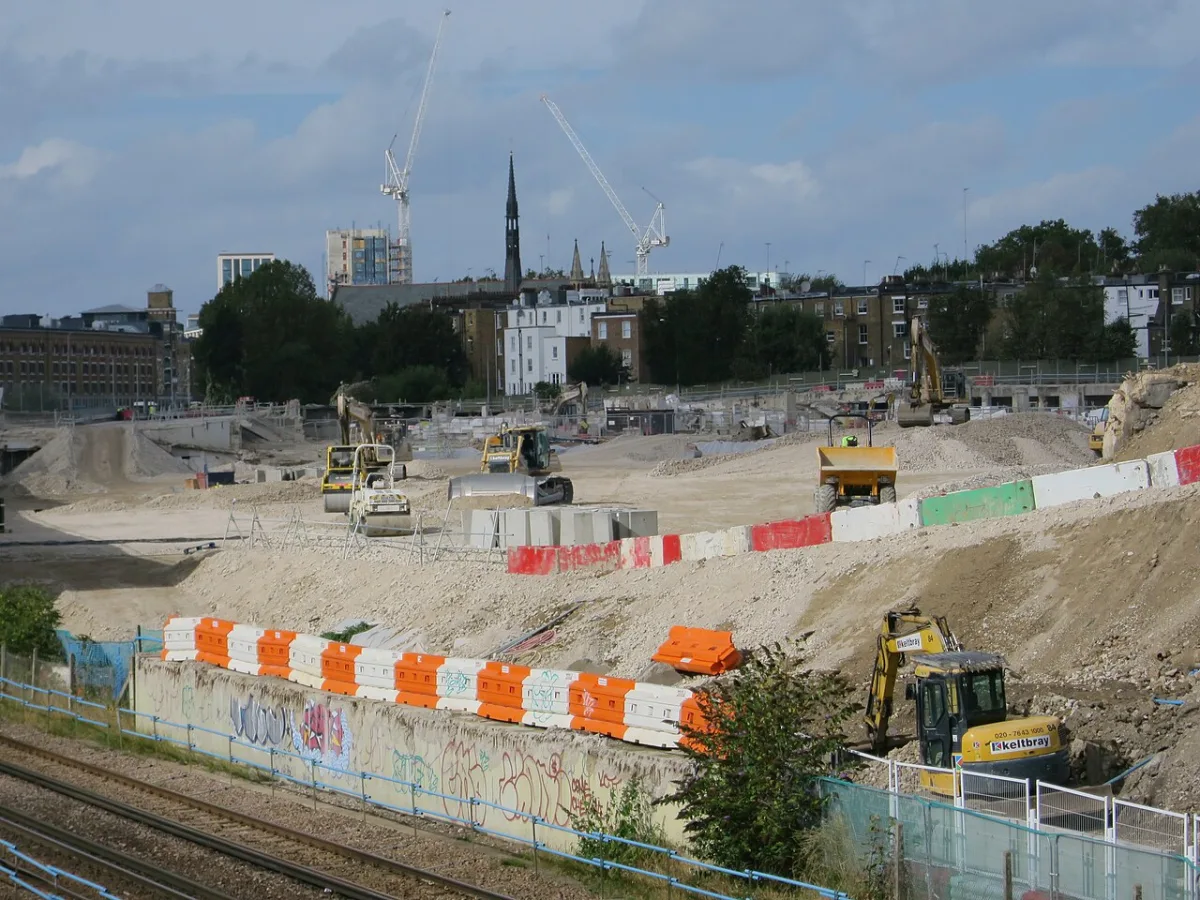
The largest development in the borough by a wide margin is at Earl’s Court, on the 44 acres of the former exhibition centre site that straddle the boundary with Hammersmith and Fulham.
Kensington and Chelsea’s Planning Committee resolved to grant permission on 16 December 2025 after several hours of debate, having concluded that the public benefits outweighed the harms. Hammersmith and Fulham had resolved to grant its half on 26 November 2025.
The Kensington and Chelsea application, reference PP/24/05187, covers up to 1,400 homes and 95,000 square metres of office floorspace, along with new cultural venues and public space. Across both boroughs the full masterplan by the Earls Court Development Company, a joint venture between Delancey, the Dutch pension manager APG and Transport for London, is for up to 6,775 homes of which up to 1,500 would be affordable, with towers reaching 42 storeys.
The application has been referred to the Mayor of London, who will decide whether to agree with the councils’ decisions or call the scheme in for his own consideration. Permission is not issued until that stage and the section 106 agreement are complete.
For scale: 1,400 homes on the Kensington and Chelsea side is roughly three years’ worth of the borough’s entire current housing target, from one site.
Grenfell Tower
Dismantling of Grenfell Tower began in September 2025 and is expected to take around two years. The government has said parts of the tower may be kept and incorporated into the permanent memorial, which is to be built on the site itself and designed through an independent commission. The council maintains a Remembering Grenfell page with updates.
What the draft London Plan would change
Beyond the headline number, two things in the 16 July 2026 draft matter here.
The target rises to 5,904 homes over ten years, all of it expected from brownfield land. The draft assigns the borough no greenfield target, which is unsurprising given how little undeveloped land there is. It also sets a purpose built student accommodation requirement of 300 bedspaces. Across London the plan seeks 502,351 brownfield homes and 56,100 greenfield, a total of 558,451 by 2037, plus 31,549 student bedspaces.
Affordable housing goes back to 35%. Kensington and Chelsea is one of twelve mainly inner London boroughs placed in Band A, where the threshold at which a scheme can follow the fast-track route returns to a 35% affordable requirement from 2028. Outer boroughs in Bands B and C face 25% and 20%.
Consultation on the draft plan runs to 15 October 2026 and responses go to the Greater London Authority rather than the council.
How to have a say on a local application
Planning applications in this borough are searched through the council’s own register at rbkc.gov.uk/Planning/searches, which is a bespoke system rather than the Idox or Public Access portals most London boroughs use. Comments on an application must normally be made within 21 days of the site notice going up.
Committee papers and decisions are published through the council’s committee system at rbkc.gov.uk/committees, and Planning Committee meetings are held in public.
Frequently asked questions
How many homes does Kensington and Chelsea have to build?
448 a year under the current adopted Local Plan, which sets a total of 4,480 over the ten years to 2028/29. The Mayor’s draft London Plan would raise that to 5,904 homes over the ten years from 2027/28, roughly 590 a year.
Is Kensington and Chelsea meeting its housing target?
No. It completed 239 homes in 2023/24 against a 448 target, and 1,479 over five years against a cumulative 2,240. It failed the government’s Housing Delivery Test at 43%, so the presumption in favour of sustainable development applies to decisions.
Has the Earl’s Court development been approved?
Both councils have resolved to grant permission, Hammersmith and Fulham on 26 November 2025 and Kensington and Chelsea on 16 December 2025. The application has been referred to the Mayor of London and permission has not yet been formally issued.
How many homes will Earl’s Court have?
Up to 6,775 across the whole site, of which up to 1,500 would be affordable. The Kensington and Chelsea portion is up to 1,400 homes plus 95,000 square metres of offices.
When was the Kensington and Chelsea Local Plan adopted?
24 July 2024, following four rounds of public consultation and an examination whose Inspector’s Report the council received on 5 July 2024.
How do I comment on the draft London Plan?
Through the Greater London Authority’s consultation, which is open until 15 October 2026.
Sources
- Local Plan, Royal Borough of Kensington and Chelsea for the adoption date and Policy HO1.
- Planning and Place Monitoring Report 2024, Royal Borough of Kensington and Chelsea for annual completions, the stepped target and the 770-home shortfall.
- Housing Delivery Test Action Plan, Royal Borough of Kensington and Chelsea for the 43% test result and its consequences.
- Major Earl’s Court development gets green light from planning committee, Royal Borough of Kensington and Chelsea and the Earls Court and West Kensington Opportunity Area page for the committee decision and application reference.
- Draft London Plan 2026, Greater London Authority for the 5,904-home brownfield target, the 300 PBSA bedspaces and the Band A affordable housing requirement.
Figures and dates were checked on 9 August 2026. Planning positions move; confirm against the council’s own documents before relying on anything here.
Have your say