
TfL has reopened a second westbound lane on the A40 Westway and taken buses off diversion. Three full weekend closures follow, the first on Friday 2 October.
The biggest item on the Kensington roadworks list has just eased. Transport for London now says two of the three westbound lanes on the A40 Westway are open between the Marylebone Flyover and the Westway Roundabout, with one still closed. Its travel advice page reads: “Following a bus fire in June 2026, 2 westbound lanes of the A40 Westway are open between Marylebone Flyover and the Westway Roundabout. One lane remains closed while we continue extensive structural inspections to make sure the flyover is safe to use.”
That is the reverse of the wording the same page carried when we last checked it on 13 September, which said two westbound lanes would remain closed. The page also now says “No buses are on diversion”, where it previously listed 34 routes as likely to be delayed.
The restriction has not gone. TfL’s traffic register still runs the Westway entry from Wednesday 24 June to Saturday 5 December 2026, and at 04:06 on 24 September it described the westbound carriageway as “reduced to two lanes for infrastructure inspection works”, with traffic flowing well.
Three full weekend closures are now booked, not two. The first is eastbound, from 10pm on Friday 2 October.
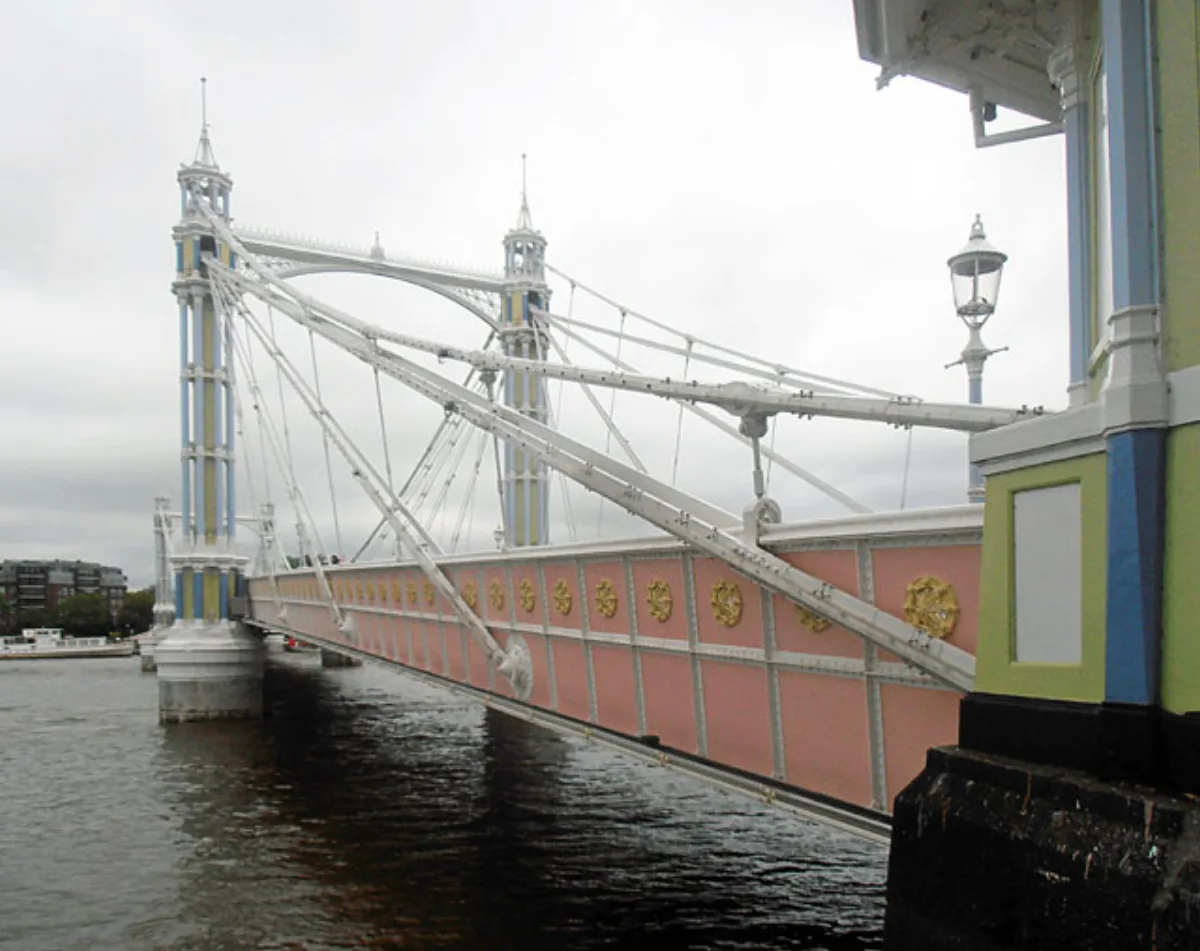
The other constant is Albert Bridge, closed to motor vehicles since 7 February 2026, with no reopening date.
The borough’s own closures come from the council’s Works and Events Bulletin, dated 17 September 2026 and reissued weekly. Dates move and many jobs carry backup dates, so check before you plan around any of them.
The Westway: a lane back, and three October weekends to come
London Fire Brigade was called to Great Western Road, Westbourne Park at 6.23pm on 24 June 2026. Four fire engines and about 25 firefighters attended, from North Kensington and Paddington fire stations. A double decker electric bus was destroyed in the bus garage there, along with two electric vehicle charging points. Nobody was hurt, the brigade had the fire under control by 7.11pm, and the cause went to its Fire Investigation Team.
The road above was shut for inspection and has been restricted ever since. Three months on, one of the two closed lanes is back.
TfL’s works page now lists three directional weekend closures in October, between the Westway Roundabout and the Marylebone Flyover, with signed diversions:
- Eastbound, from 22:00 Friday 2 October to 05:00 Monday 5 October.
- Westbound, from 22:00 Friday 23 October to 14:00 Sunday 25 October.
- Westbound, from 22:00 Friday 30 October to 05:00 Monday 2 November.
If bad weather stops the work, TfL says the eastbound closure runs instead on the weekend of Friday 16 October.
TfL and the council do not agree on two of those dates. The council’s bulletin of 17 September lists only two Westway weekends, by Costain for TfL: 2 to 5 October eastbound with 16 to 19 October as the backup, and 23 to 26 October westbound with 30 October to 2 November as the backup. TfL now treats 30 October to 2 November as a third planned closure rather than a reserve, and ends the 23 October westbound closure at 2pm on the Sunday rather than 5am on the Monday. TfL manages the road, so its dates are the ones to work from, but the earlier Sunday finish is worth knowing if you had written off the whole weekend.
Two things are worth knowing about the structure itself. The Westway is carried on around 21 bridge structures built between 1969 and 1970, it normally carries about 96,000 vehicles a day, and the speed limit along the whole stretch was cut from 40mph to 30mph in July 2020 to protect the ageing expansion joints.
Closed or restricted right now
These were live on the council’s bulletin of 17 September, or on TfL’s register, at the time of writing.
| Road | Effect | Dates | Who |
|---|---|---|---|
| King's Road at Beaufort Street | Multiway temporary traffic signals, 8pm to 5am, street lighting work | 24 to 25 September | The council |
| Aubrey Walk | Closed at Aubrey Road, Wycombe Square to Aubrey Lodge | To 9 October | Fulcrum Infrastructure |
| Redesdale Street | Closed, Shawfield Street to Radnor Walk | To 25 September | Thames Water |
| Courtfield Gardens | Closed, Cromwell Road to Courtfield Road | To 25 September | UK Power Networks |
| Onslow Square | Road width reduced at number 39, gully repairs | To 29 September | The council |
| Royal Hospital Road | Footway closed at the chapel gate, both sides | To 25 September | The council |
| Notting Hill Gate | Footway closed, Pembridge Gardens to opposite Kensington Church Street | To 20 October | The council |
| Gloucester Walk | Footway closed both sides, Hornton Street to Kensington Church Street | To 29 October | The council |
| Iverna Gardens | Footway closed, running since late July | To 30 October | The council |
| Adair Road | Footway closed both sides, Golborne | To 9 October | The council |
| Langton Street | Footway closed, King's Road to Gertrude Road | To 18 November | The council |
| Sloane Street | Width reduced at Sloane Square, 10pm to 6am | To 9 October | MK Illuminations UK |
| Cadogan Lane | Footway closed at 42 to 44, developer works | To December 2027 | Developer |
Three jobs that were on last week’s page have finished or come off the list: Ossington Street, All Saints Road and Harrington Gardens are all gone from the bulletin, and the Brompton Road lane closure at Egerton Crescent has ended.
One has moved the other way. The Fulham Road multiway lights outside Chelsea and Westminster Hospital, booked for 25 to 28 September in the previous bulletin, are now listed as On Hold with no dates at all.
The next fortnight, day by day
| Dates | Road | Effect |
|---|---|---|
| 24 September | Kensington Court | Closed at Kensington Road. Backup 1 October |
| 24 September | St Luke's Street, number 20 | Road width reduced for a lift, 8am to 6pm |
| To 26 September | Kensington Road, opposite Princes Gate | Lane closure with multiway lights. This stretch is in Westminster |
| 26 to 27 September | Queen's Gate, southbound | Closed at Kensington Road. Backup 3 to 4 October |
| 28 September | De Vere Gardens | Closed at Kensington Road. Backup 5 October |
| 28 September to 2 October | Redfield Lane, number 22 | Closed. Backup 5 to 9 October |
| 28 September to 11 October | Kensington High Street at Campden Hill Road | Right turns banned. Backup 5 to 18 October |
| 28 September to 3 October | King's Road, outside and opposite 186 | Road width reduced, gully repairs |
| 28 September to 11 November | Hazlewood Crescent | Footway closed, Golborne Road to Bosworth Road and on to Kensal Road |
| 30 September to 1 October | Palace Gate | Closed at Kensington Road. Backup 7 to 8 October |
| 30 September to 2 October | Basil Street and Hans Road, outside Harrods | Width reduced, 10pm to 2am |
| 30 September to 21 October | Petersham Lane | Width reduced to the rear of the Citadines hotel, 8am to 5pm |
| 6 to 7 October | Paultons Street, number 2 | Closed |
| 6 to 7 October | Draycott Avenue | Closed south of Sloane Avenue Mansions. Backup 10 to 11 October |
| 6 October | Earl's Court Road, opposite Child's Place | Lane closure, 8am to 9pm, for Virgin Media |
| 6 to 8 October | Stanley Gardens at Stanley Crescent | Width reduced for a lift, with a full day on 7 October |
Most of the Kensington Road junction closures belong to one contractor. Compass Infrastructure, working for UK Power Networks, is closing side roads in turn along the A315, from 8am on the first day to 6pm on the last. Young Street, Prince of Wales Terrace, Victoria Road and the northbound side of Queen’s Gate have already had their turn. Kensington Court today, then Queen’s Gate southbound, De Vere Gardens and Palace Gate are what is left, in that order, and the sequence finishes on 1 October.
Two right turn bans are booked at the same junction for different companies. Kensington High Street at Campden Hill Road loses its right turns from 28 September to 11 October for M Group, working for Thames Water, and again from 26 to 30 October for Thames Water directly. The Kensington Church Street right turn ban at Kensington High Street runs 9 to 11 October.
Over the borough boundary, Princes Gardens is closed at Exhibition Road for a crane on 25 September and on 2, 9 and 16 October, 8am to 6pm. That one is in Westminster.
Albert Bridge: still shut, and still no date
A routine inspection in February found a crack in a cast iron component at one of the bridge abutments. The council closed the 1873 crossing to motor traffic the same day. It is still open to pedestrians and cyclists.
The council says it is committed to reopening in 2027 but that “it is not currently possible to provide a definitive reopening date”. The works register still carries the closure to 24 February 2027, with a note that the date “will be revised when final repair works start in December 2026”. Treat any reopening date you see as provisional.
The council’s page was last updated on 21 September, but its progress table still stops at August, so there is no September entry yet. The August entries are:
- Repainting of the bridge’s internal walls and parapets is under way. It is the first of a programme of maintenance jobs being done while the bridge is shut, alongside new lighting, refurbished toll booths and a new road surface.
- A bid has gone in to the Department for Transport Structures Fund, a competitive capital programme launched in April 2026. The council has published its 23 page submission. Successful bidders will be announced in autumn 2026, so that is the next thing to watch here.
The council is spending up to £8.5 million on the repair and refurbishment, and says physical construction on the bridge will start before Christmas 2026. The work involves freeing a seized axle in the joint as well as replacing the cracked part, and temporary works have to go in first to hold the weight of the bridge while the damaged component comes out. The replacement has to be designed and manufactured from scratch, which is the reason for the wait.
Overnight closures south of the river
This matters here because Albert Bridge is closed and its traffic has gone to the neighbouring crossings. Both of the following are in Wandsworth, not in this borough, but the council lists them because of the knock-on.
- Albert Bridge Road, from the bridge to Prince of Wales Drive, closes nightly from 8.30pm to 5.30am until 25 September, for resurfacing by Wandsworth Council. That is the last night.
- Wandsworth Bridge is under maintenance to 30 September, with nightly closures 8pm to 5am to 30 September for resurfacing.
For the rest of September, two of the crossings west of Chelsea Bridge are out overnight while Albert Bridge is out entirely.
Events that close roads
- The Hogarth Road Sunday market closure has ended. Its last Sunday was 20 September.
- Phillimore Walk still closes every Saturday, Hornton Street to Campden Hill, 7.30am to 3pm until 28 November, for the market.
- The Palace to Palace charity cycle ride crosses Fulham Road at Beaufort Street on Sunday 4 October, 6.50am to 5.45pm.
- Chelsea’s next three home fixtures are Saturday 10 October against AFC Bournemouth, Saturday 24 October against Tottenham Hotspur and Saturday 31 October against Manchester United. Heavy pedestrian traffic is flagged on Fulham Road, Gunter Grove, Ifield Road, Hortensia Road and King’s Road between 12.30pm and 5pm each time.
- The Rosary Crusade of Reparation procession uses Sloane Street from Pont Street to Knightsbridge on Saturday 17 October, 2pm to 3.30pm.
- Portobello Road closes to vehicles every Sunday from 6 to 20 December for street trading, which is the only December closure the bulletin carries.
Longer closures that are not going away
Building sites hold several streets for another year or more:
- Pelham Street, one direction closed to November 2027 and a second job there to December 2027.
- Kynance Mews and Kynance Place at Gloucester Road, to December 2027.
- Hans Crescent eastbound between Pavilion Road and Sloane Street, except for construction vehicles, to December 2027.
- Chelsea Bridge Road at Chelsea Barracks, to December 2027.
- Cadogan Lane, footway at 42 to 44, to December 2027.
- Earl’s Court Road footway outside number 24, to March 2027.
- Pont Street, restoration of the cabmen’s shelter, to December 2027.
Three Kensington High Street area jobs stay marked on hold rather than cancelled: a Thames Water closure of Hornton Street at the junction, a nightly right turn ban at Holland Road, and the Fulham Road lights outside Chelsea and Westminster Hospital.
The pavement programme, autumn and winter
The council’s footway improvement scheme works 8am to 5pm with a local diversion, and the list now runs to autumn 2027. The ones that will be in the way longest:
- Kensal Road, Canalot Studios to James Hill House, 12 to 23 October.
- Abingdon Road, Scarsdale Villas to Abingdon Villas, 12 October to 30 December.
- Glebe Place, Cheyne Row to the nursery school to King’s Road, 20 October to 7 December.
- Notting Hill Gate, Farmer Street to number 63, 21 October to 18 November, then Hillgate Street to number 97, 19 to 25 November.
- St Lawrence Terrace, Chesterton Road to Bonchurch Road, 26 October to 10 December.
- Sheffield Terrace, Hornton Street to Kensington Church Street, 30 October to 30 November.
- Wedlake Street, Kensal Road to the end, 2 to 30 November.
- Dovehouse Street, Britten Street to Cale Street, 6 November to 18 December.
- Appleford Road in Golborne, 12 November to 14 December.
- Stanford Road, 19 November to 8 December.
- Pembridge Villas, 4 January to 24 March 2027.
- All Saints Road, 5 February to 9 October 2027, the longest job on the list by a distance.
What is coming but not yet dated
The three jobs most likely to cause real disruption are still marked TBC, as they have been all autumn:
- Overnight carriageway resurfacing, 8pm to 6am, on Holland Park Avenue (Addison Avenue to Norland Square), Notting Hill Gate westbound at the Pembridge Road junction, and Kensington High Street eastbound between Hornton Street and Derry Street. These are the borough’s three busiest surface routes, which is why the work is booked at night.
- A long list of residential resurfacing closures with no dates, including Anderson Street, Basil Street, Bevington Road, Brompton Square, Cadogan Place, Campden Hill Road, Culford Gardens, Eldon Road, Elvaston Place and Ixworth Place.
- Harrow Road night resurfacing at Edgware Road for TfL, in Westminster.
What it means for you
If your journey uses the Westway, this is the first real improvement since June. Two westbound lanes are open, no buses are on diversion, and TfL described traffic as flowing well on the morning of 24 September. The lane restriction is still on the register to 5 December, and the structural inspections are the reason, so do not read the extra lane as the end of it.
What replaces it in the diary is three October weekends. Eastbound is out from 10pm on Friday 2 October, and westbound is out on the two weekends that follow, 23 to 25 and 30 October to 2 November. If you drive west out of London on a Friday night in late October, those are the weekends to plan around.
If you drive along Kensington Road, the road itself stays open. What changes is that you will not be able to turn into one side street or another on most weekdays to 1 October, and it is a different street each time. From 28 September you also lose the right turn from Kensington High Street into Campden Hill Road for a fortnight.
If you cross the river from Chelsea in the evening, the pinch eases after 30 September. Albert Bridge is shut all day, Albert Bridge Road has its last overnight closure on 25 September, and Wandsworth Bridge is shut overnight to 30 September. Chelsea Bridge and Battersea Bridge take what is left.
If you park on the street near any of these, watch for suspension notices. The council posts them on the affected bays, and a suspended bay is not a place to leave a car.
What it costs to keep a car here
Resident parking permit prices changed on 1 April 2026 and are built from a base cost plus a charge for every gram of CO2 your car emits.
For a twelve month permit the council charges a £73 base, then £1 for each CO2 g/km. A fully electric car pays the base cost only. A diesel registered before 1 September 2015, which will be pre-Euro 6, pays a £94 surcharge on top. A second vehicle at the same address adds £108.
If your car’s CO2 figure is not on record, the council charges a flat addition instead: £147 a year for an engine of 1549cc or less and £204 above that. Refunds are paid within 28 days minus a £13 administration fee.
Three, six and twelve month permits are all available, and the shorter ones are proportionally worse value. The base cost is £44 for three months against £73 for twelve. Use the council’s parking permit calculator to get the figure for your own registration. Our parking guide has the visitor and bay rules.
One thing to know if you pay monthly: since 27 August 2026 the council has not been able to set up a new monthly permit subscription or autorenewal, which it puts down to a technical issue. Existing subscriptions carry on as normal, and 3, 6 and 12 month permits can still be bought. The banner was last updated on 17 September and the council says it will update it when the problem is fixed.
Charging zones: what applies here
ULEZ applies across the whole borough. The Ultra Low Emission Zone covers all London boroughs and the City of London, and the charge is £12.50 a day for a vehicle that does not meet the standards.
The Congestion Charge does not reach Kensington and Chelsea. The Western Extension, which covered this borough from 2007, was removed on 4 January 2011. The zone’s western boundary has sat at Edgware Road, Park Lane and Vauxhall Bridge Road ever since. You start paying when you drive east of those roads, not when you leave home.
If you do cross into the zone, the charge rose on 2 January 2026 and is now £18 a day paid on the day or in advance, or £21 if you pay by midnight on the third day after. It runs 07:00 to 18:00 Monday to Friday and 12:00 to 18:00 at weekends and on bank holidays, with no charge between Christmas Day and the New Year’s Day bank holiday.
Getting around without the car
Given the permit costs, the Westway restriction and the Albert Bridge closure, the Underground is doing more work than usual in this borough. Most of Kensington and Chelsea is in zone 1, where a single costs £3.10 at peak and the daily cap is £8.90. The tube and fares page has the zone for every station in the borough and typical journey times.
Frequently asked questions
Is the A40 Westway closed?
Not closed, and less narrowed than it was. Two of the three westbound lanes are open between the Marylebone Flyover and the Westway Roundabout, one is still shut, and TfL’s traffic register gives the restriction as running to 5 December 2026. The eastbound carriageway is open. Full weekend closures are booked for 2 to 5 October eastbound, 23 to 25 October westbound and 30 October to 2 November westbound.
Why is the Westway restricted at all?
A double decker electric bus was destroyed by fire at the bus garage on Great Western Road, Westbourne Park, on the evening of 24 June 2026. The road above was closed for inspection. TfL says one westbound lane remains closed “while we continue extensive structural inspections to make sure the flyover is safe to use”.
Which roads are closed in Kensington this week?
King’s Road at Beaufort Street has multiway signals overnight on 24 and 25 September. Aubrey Walk is closed at Aubrey Road to 9 October. Redesdale Street and Courtfield Gardens are closed to 25 September, and Onslow Square has its width reduced at number 39 to 29 September. Kensington Road at Princes Gate, in Westminster, has a lane closure with multiway lights to 26 September.
Is Albert Bridge open?
Not to motor vehicles. It closed on 7 February 2026 after a crack was found in a cast iron component at one of the abutments, and it remains open only to pedestrians and cyclists. The council says it is committed to reopening in 2027 but that it cannot currently give a definitive date.
Why is Albert Bridge taking so long to fix?
The replacement components for an 1873 cast iron bridge have to be specially designed and manufactured, and temporary works have to hold the bridge’s weight while the damaged part comes out. The council is spending up to £8.5 million, construction on the bridge is due to start before Christmas 2026, and it has bid to the Department for Transport Structures Fund, with successful bidders to be announced in autumn 2026.
Is Wandsworth Bridge closed?
It is under maintenance until 30 September 2026, with nightly closures from 8pm to 5am for resurfacing until then. Wandsworth Bridge is in Wandsworth, about three miles south west of Chelsea, but the closure matters here because Albert Bridge is shut.
How much is a resident parking permit in Kensington and Chelsea?
£73 a year for a fully electric car, and £73 plus £1 for every CO2 g/km for everything else. A mid-size petrol car at 150 g/km costs about £223 a year. Pre-Euro 6 diesels pay a £94 surcharge.
Do I have to pay the Congestion Charge to drive in Kensington?
No. The borough has been outside the Congestion Charge zone since the Western Extension was removed in January 2011. ULEZ does apply, at £12.50 a day for a non-compliant vehicle.
Where can I check current roadworks in the borough?
The council publishes a Works and Events Bulletin listing council works, utility works and events on the public highway, updated weekly. It is not exhaustive; the council points to one.network for everything else. TfL’s own traffic status page covers the red routes, including the Westway.
Sources
- Works and Events Bulletin, 17 September 2026, Royal Borough of Kensington and Chelsea for every borough closure, footway job, event and date listed above, including the Wandsworth and Westminster items the council lists under other authorities’ networks and its own version of the October Westway weekends.
- Traffic status updates, Transport for London for the Westway entry running from 24 June to 5 December 2026 and the “reduced to two lanes” wording, read at 04:49 on 24 September 2026.
- A40 Westway works, Transport for London for the two open westbound lanes, the “no buses are on diversion” line, the structural inspections and the three October weekend closures, and A40 Westway for the 96,000 vehicles a day figure, the 21 bridge structures, the 1969 to 1970 construction dates and the 2020 speed limit cut.
- Bus fire, Westbourne Park, London Fire Brigade for the 24 June incident, the time of the call, the appliances sent and what was destroyed.
- Albert Bridge repairs, Royal Borough of Kensington and Chelsea for the closure, the cause, the £8.5m cost, the August progress update, the temporary works and the Department for Transport Structures Fund bid.
- Resident parking permit fees and charges, Royal Borough of Kensington and Chelsea for permit prices from 1 April 2026, and Annual parking reports for the monthly subscription banner.
- Congestion Charge, Transport for London for the daily rate and hours, and TfL’s 2011 press release on the removal of the Western Extension.
Roadworks dates move, and most of these jobs carry backup dates. Confirm against the council’s current bulletin before planning around any of them.
Have your say