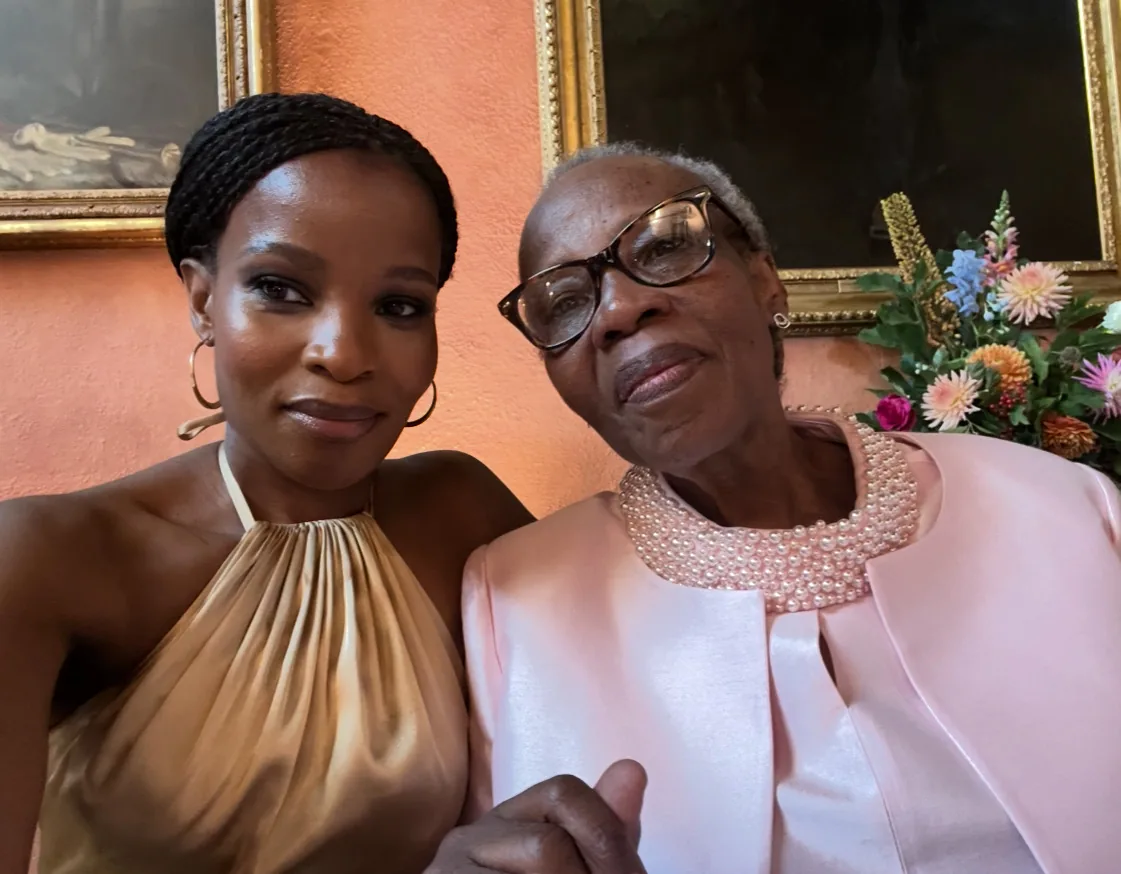

Dineo's father had young onset Alzheimer's at 58. Her mother's symptoms were mistaken for grief. Her own account of both diagnoses, told in full.
The six mirrors in the subway at South Kensington Underground station ask whoever stops in front of them whether the first person cured of Alzheimer’s could be standing next to them. They come down on Sunday 4 October. One of the people in the campaign film they belong to is Dineo, who is London based, and who has been through the diagnosis twice in one family: her father, Johnny, and then her mother, Edith.
When we wrote about the gallery on 21 September we said we had put questions to her about both of those diagnoses. She has now answered them in writing, through Alzheimer’s Research UK. Her answers are below, at length, because they are the point of the piece.
Johnny began showing symptoms in his late 50s and was diagnosed with young onset Alzheimer’s disease at 58. Edith was diagnosed with dementia after his death.
The first sign was the reports he stopped handing in
We asked what the first sign in her father was that she only recognised for what it was afterwards.
“Dad was a quantity surveyor and started showing signs at work. He was known for being organised, but he stopped handing in his reports and stored them, without sharing them with his colleagues. My mum knew something was not quite right.
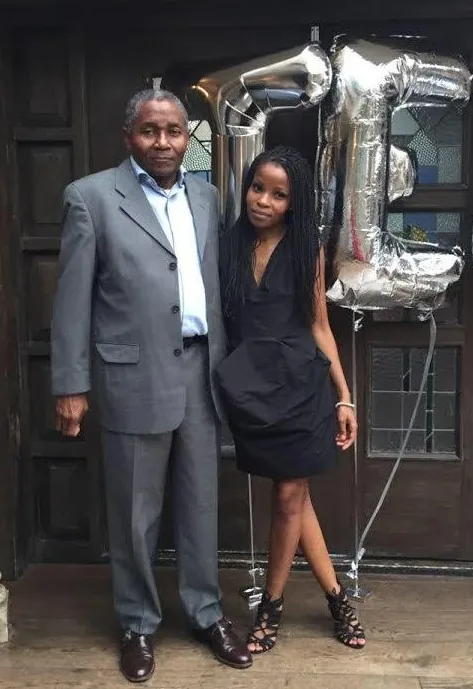
“I remember my mum saying to me ‘I don’t think your dad is well.’ While I couldn’t see it at the time, his memory problems and changes in behaviour were concerning for my mum. Because he was relatively young for someone with the disease, dementia wasn’t the first thought that came to mind. But because Mum had a nursing background, she recognised the signs and pushed for him to get a diagnosis.”
The second time, the word everyone reached for was grief
Getting a diagnosis for her mother came after her father’s death. We asked what made the process harder the second time.
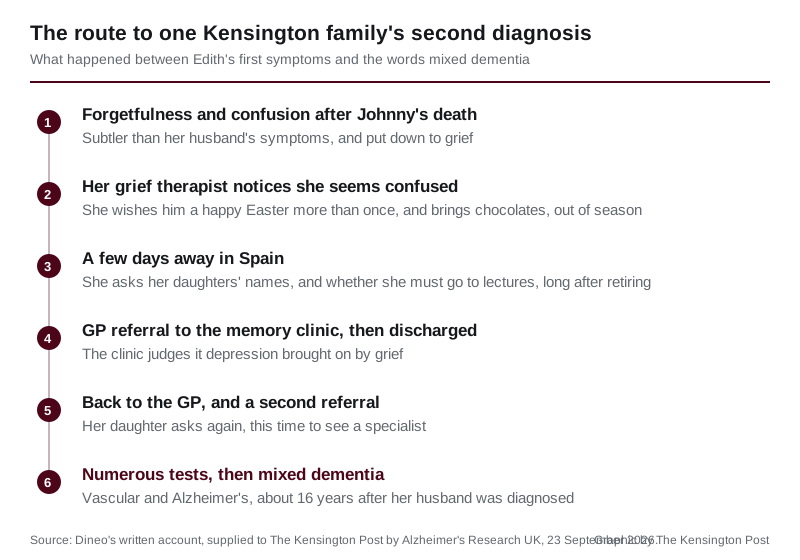
“Looking back, Mum’s early symptoms of forgetfulness and confusion were more subtle than my dad’s, and were initially mistaken for grief. Unfortunately, grief counselling didn’t work for my mum and her therapist noted she seemed confused. For example, she would repeatedly wish her therapist a happy Easter, and had taken him chocolates, although it wasn’t Easter.
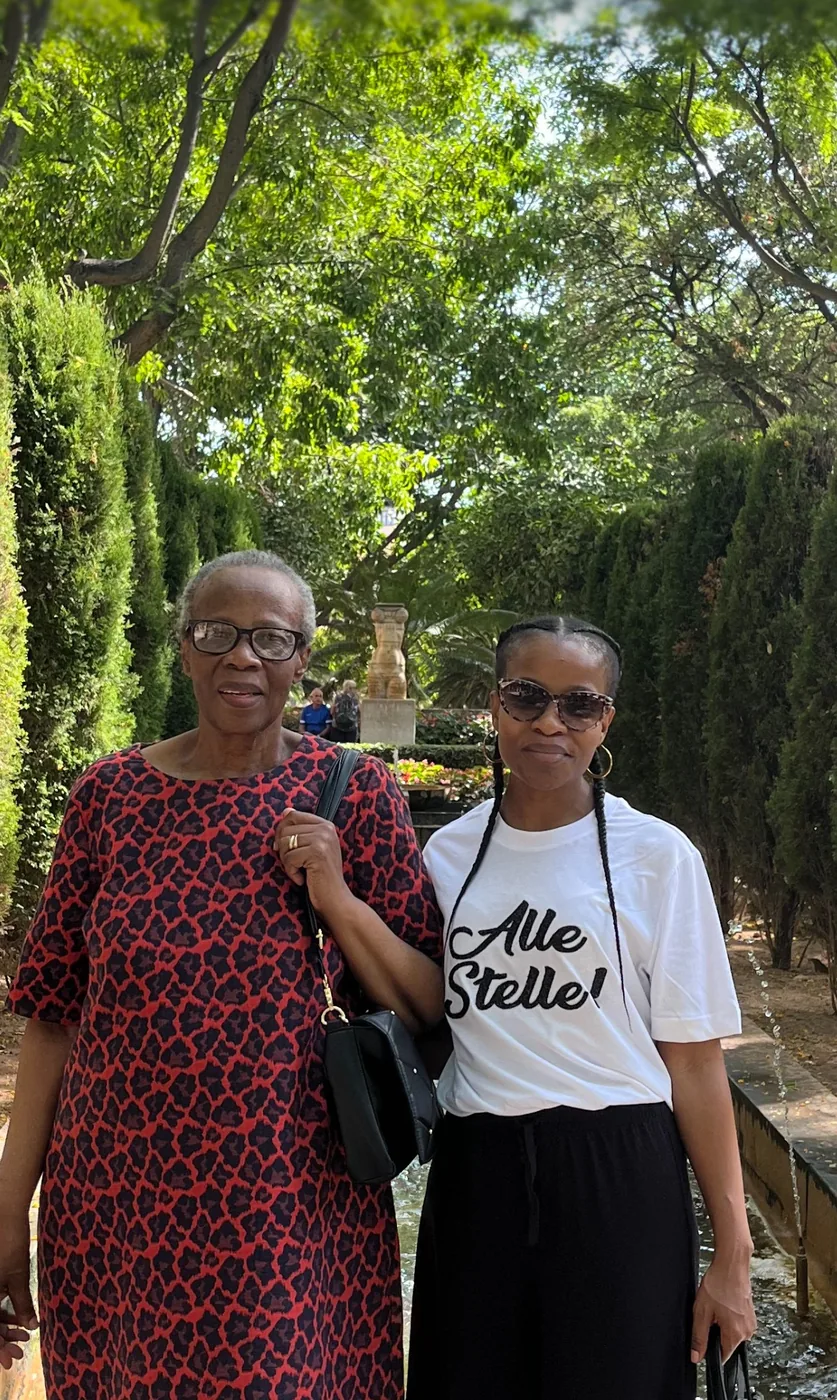
“I took my mum away for a few days to Spain and her confusion became alarming. She would ask me what my sisters’ names were, and whether she had to go to lectures, forgetting she had retired from lecturing.
“I took Mum to the GP where we were referred to the memory clinic but she was discharged as they thought it was depression as a result of grief. As the grief counselling wasn’t working, I took Mum back to the GP and asked for another referral to see a specialist. This time Mum had numerous tests which culminated in a diagnosis of mixed dementia (vascular and Alzheimer’s).”
About 16 years separated the two diagnoses, and she found the older one the more thorough:
“There were about 16 years between my mum and dad’s diagnosis, but my dad’s test seemed more comprehensive. It made me realise not much had changed in 16 years, and that’s why I support Alzheimer’s Research UK. Without research nothing will change.”
What she says is missing
We asked what practical help was missing for her as the person doing the organising for both parents. Her answer was not about respite or paperwork. It was about being believed at the surgery door.
“The diagnosis process really needs to improve. People in this awful position, like my Mum and I should be treated respectfully when they raise concerns, not challenged why they want a diagnosis.
“It’s essential that anyone going to their GP with concerns needs to be listened to, taken seriously and not dismissed.
“A timely diagnosis can make such a difference. It gives you the opportunity to take part in drug trials, put powers of attorney in place and plan your lives accordingly. When the diagnosis is delayed or becomes a long, protracted process, these opportunities become lost.
“I also want people to understand that Alzheimer’s is so much more than people being forgetful. The symptoms can present in many different ways, and it isn’t only something that affects older people. It’s also not a natural part of aging. We need greater awareness of this, so that more people can recognise the signs, seek help, and get a timely diagnosis, rather than experiencing the stress and heartbreak we have been through.”
That is worth setting against the borough’s own figures. The council’s Age Well needs assessment, updated on 17 August 2026, estimates 1,750 people in Kensington and Chelsea are living with dementia and records 1,070 with a formal diagnosis from their GP. That is 680 people who have not had the conversation Dineo had to ask for twice. The council says its diagnosis rates are below the London average.
What she would want a commuter to do
The last question was the simplest: if someone stops at one of the mirrors at South Kensington, what next?
“I’d like them to feel inspired by Alzheimer’s Research UK’s The First One campaign, and hopeful that we can make a difference. If nothing changes, one in two of us will be directly affected by dementia either caring for someone with the condition, developing it ourselves, or both.
“I’d like people to get involved in supporting Alzheimer’s Research UK to continue the progress being made in research to find a cure so that other families don’t have to experience the heartbreak my family has been through.”
What it means for you
The gallery sits in the exit corridor near the ticket hall at South Kensington, before the ticket barriers, so you can see it without touching in or paying a fare. It comes down on Sunday 4 October. A second gallery goes into Victoria station on Thursday 24 September and runs there for two weeks from that date.
If the more useful part of this is the diagnosis itself, the route Dineo describes is the one open to anyone: a GP appointment, and a second one if the first does not settle it. The council keeps a page on dementia support in Kensington and Chelsea, and the charity’s Dementia Research Infoline is on 0300 111 5111, 9am to 5pm Monday to Friday. The campaign’s Ready for a Cure petition asks the Government to speed up diagnosis, widen access to trials and set up a fund for new treatments.
Getting there: our guide to Kensington tube and travel has the fares and the lines that serve South Kensington, and Kensington roadworks and travel has what is closed this week.
Dineo’s answers were given in writing and supplied to The Kensington Post by Alzheimer’s Research UK on 23 September 2026, along with the family photographs. Obvious typing slips have been corrected; nothing else has been changed.
Have your say