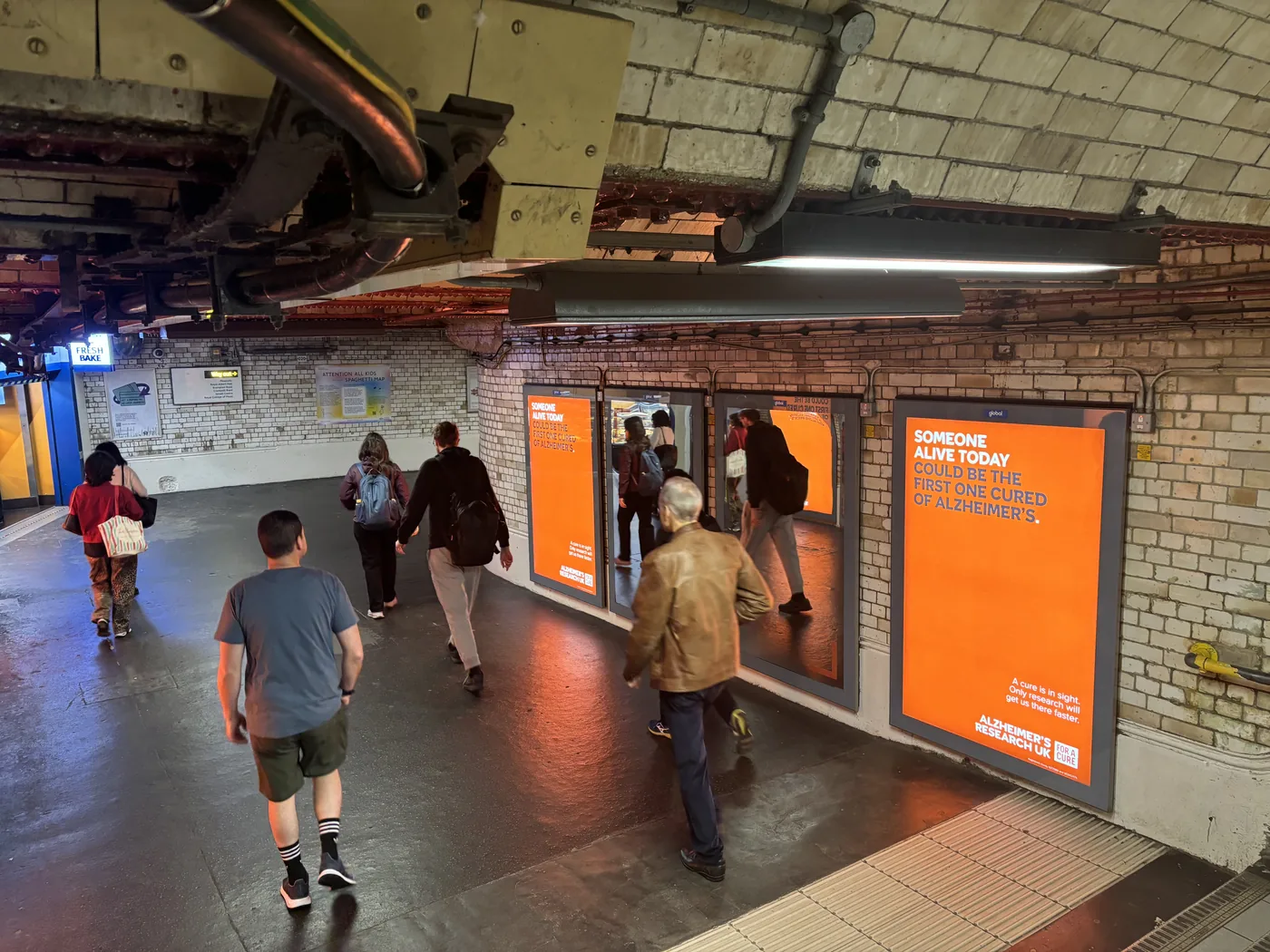

Six mirrors sit before the ticket barriers until Sunday 4 October, asking commuters whether the first person cured of Alzheimer's is standing beside them.
Six mirrors went up at South Kensington Underground station today and will stay there until Sunday 4 October. Each one asks the same question: “Could the first person cured of Alzheimer’s be standing next to you?”
They are the work of Alzheimer’s Research UK. A second gallery goes into Victoria station on Thursday 24 September and runs there for two weeks from that date. The charity calls it a gallery of mirrors. The point is that the person it describes is not a scientist in a laboratory somewhere, but whoever happens to be in the corridor at the time.
Corrected 21 September: this article first said the Victoria display was already up. The charity has since confirmed it goes in on 24 September.
Where to find them
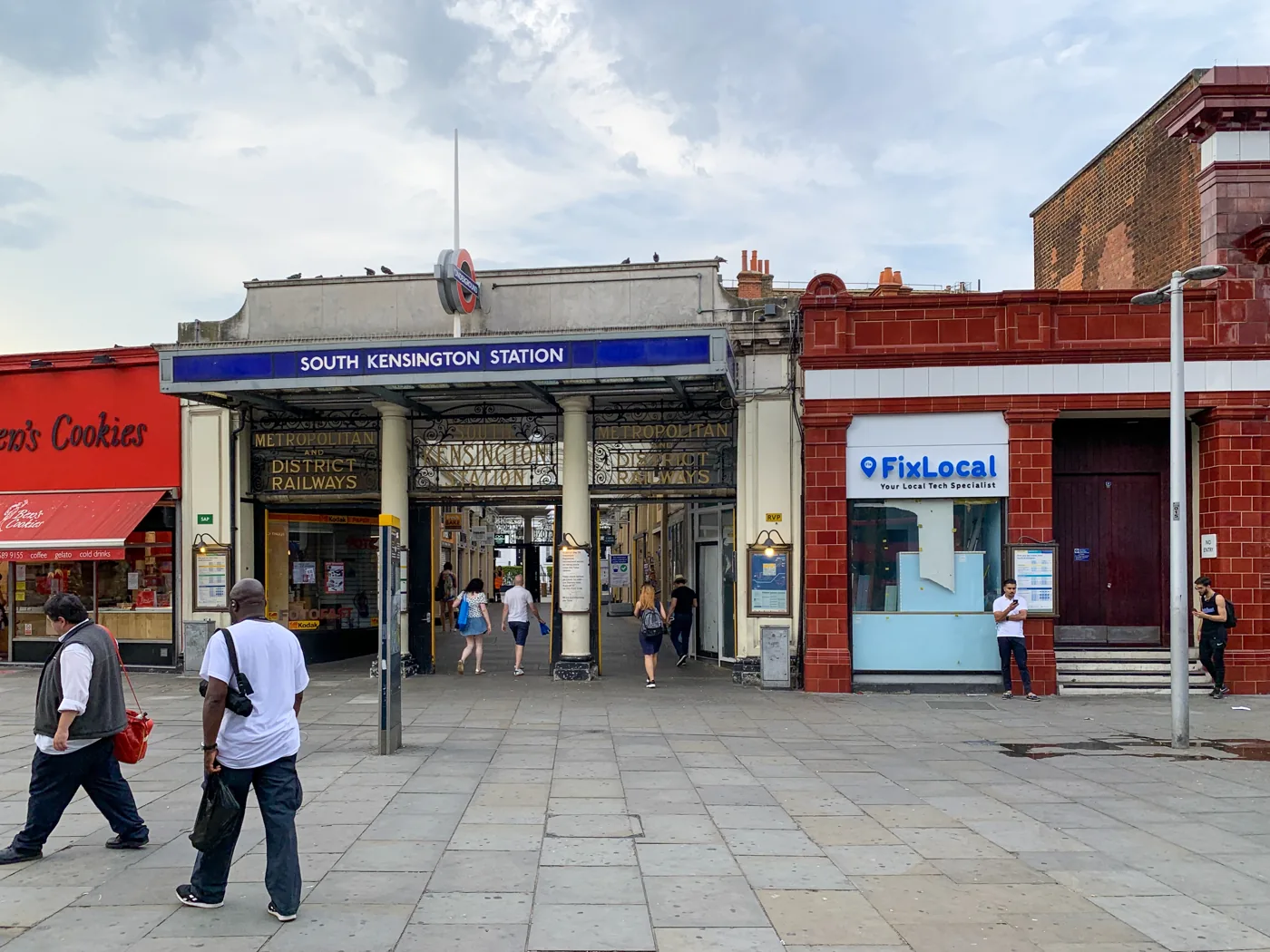
A press officer told The Kensington Post exactly where they sit at South Kensington:
- in the exit corridor near the ticket hall
- six mirrors in total
- before the ticket barriers, so you do not need to touch in to see them
That last detail matters. You can look at the gallery and walk out again without touching in or paying a fare. The run ends on Sunday 4 October.
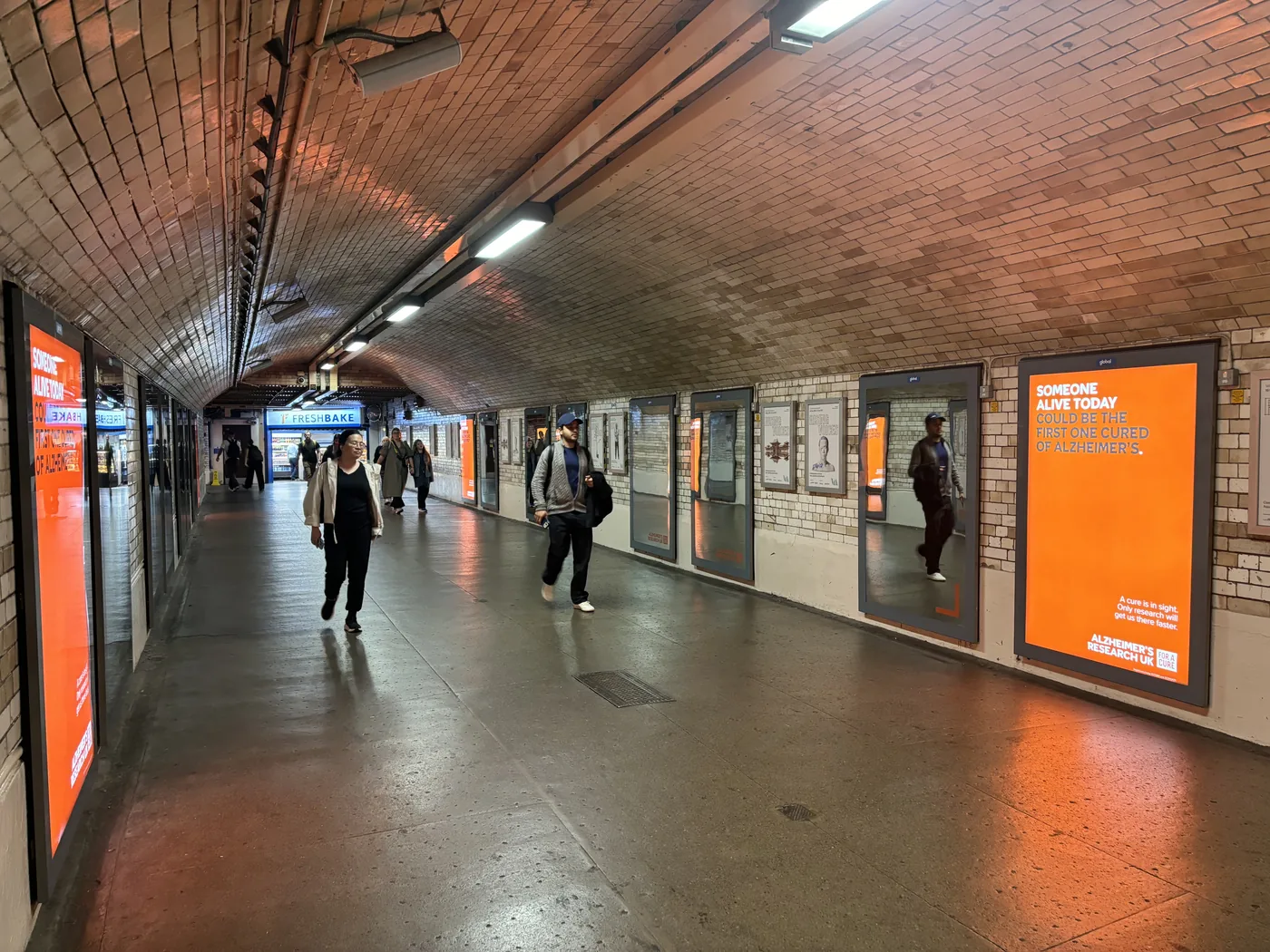
The charity sent us these pictures and this clip from the subway on the opening day. The panel text beside each mirror reads “Someone alive today could be the first one cured of Alzheimer’s“, with the line “A cure is in sight. Only research will get us there faster” beneath it. The image circulated with the press release is labelled AI generated, so we have not used that one.
The campaign behind the mirrors
The mirrors are part of The First One, which the charity describes as its biggest campaign to date. It launched on 8 September, during World Alzheimer’s Month, with a film voiced by the BAFTA-winning actor and writer Aimee Lou Wood and a soundtrack from The Cure, their 1985 single In Between Days.
The people in the film include scientists working on a cure, supporters of the charity and people who have lived with dementia in their own families. One of them is Dineo Moema, who is London based. In the charity’s own launch announcement she said:
“My family has lived through dementia twice. Sadly, my experience isn’t uncommon. This campaign brings together people from all walks of life, united by the heartbreak it causes and by the determination to reach a cure.”
She has since answered our questions about both of those diagnoses in writing, and her account is now published in full: both her parents had dementia.
The charity’s chief executive, Hilary Evans-Newton CBE, said at the launch: “The idea that someone alive today could become the first person cured of Alzheimer’s disease would have seemed unimaginable not long ago. Today, thanks to decades of research, it’s a future we know is within reach.”
Its published figures for the UK are that almost one million people are living with dementia now, rising to 1.4 million by 2040, and that more than 190 trials are under way testing medicines that might slow or stop the disease.
What the numbers look like in this borough
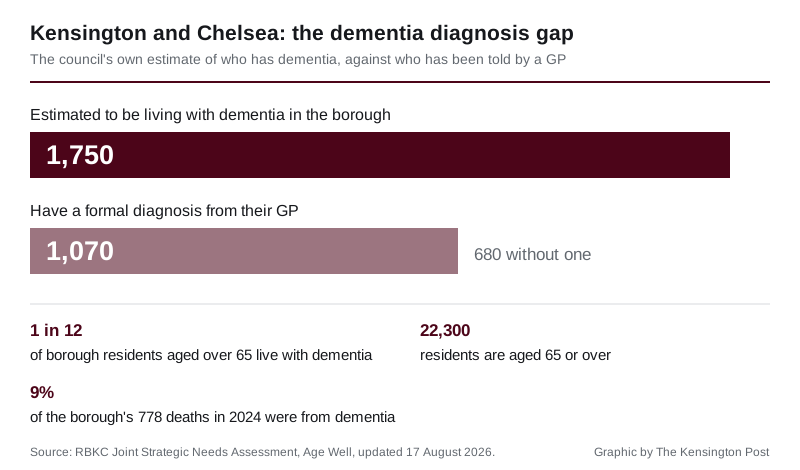
The local picture is in the council’s own Age Well needs assessment, last updated on 17 August 2026. It records:
- 22,300 residents aged 65 or over
- one in 12 of them living with dementia
- an estimated 1,750 people with dementia in the borough
- only 1,070 of them with a formal diagnosis from their GP
- dementia behind 9 per cent of the borough’s 778 deaths in 2024
The gap between those middle two figures is 680 people. The council puts it plainly: “our diagnosis rates are below the London average.”
Alzheimer’s Research UK gave us a second set of figures, for the wider NHS area. It says around 34,000 people over 65 in the NHS West and North London Integrated Care Board area are estimated to have dementia, that 22,517 are registered with GP practices there, and that the board’s diagnosis rate for the over-65s is 66.2 per cent. The charity notes itself that this covers a much larger area than the borough, and West and North London takes in eight London boroughs, so the figure is not a Kensington one. The charity also publishes waiting times and prevalence for the Kensington and Bayswater constituency through its Polimapper visualisations.
The petition
The campaign carries a petition called Ready for a Cure. It asks the Government to get the NHS ready for the treatments and tests now arriving, under three headings the charity sets out on its own petition page:
- Test: a national plan to bring new dementia tests into the NHS
- Trial: connect more people with dementia to clinical trials
- Treat: establish a Dementia Drugs Fund so new treatments can be used while evidence is gathered about them
The charity says it will present the petition to Government and Parliament, and use it in meetings with ministers, MPs and peers. It does not publish a running signature count on the page, and the figure we asked for did not reach us before publication.
What it means for you
If you pass through South Kensington in the next fortnight, the gallery is free and it is on your side of the barriers. You do not need a ticket and you do not need to go down to the platforms. It comes down on Sunday 4 October.
If the more useful thing is the diagnosis gap, the council’s own numbers say 680 people in Kensington and Chelsea are thought to be living with dementia without anyone having told them so. A GP appointment is the route to changing that. The council keeps a page on dementia support in Kensington and Chelsea, and the charity’s Dementia Research Infoline is on 0300 111 5111, 9am to 5pm Monday to Friday.
Planning a trip in? Our guide to Kensington tube and travel has the fares and the lines that serve South Kensington, and Kensington roadworks and travel has what is closed this week.
Have your say