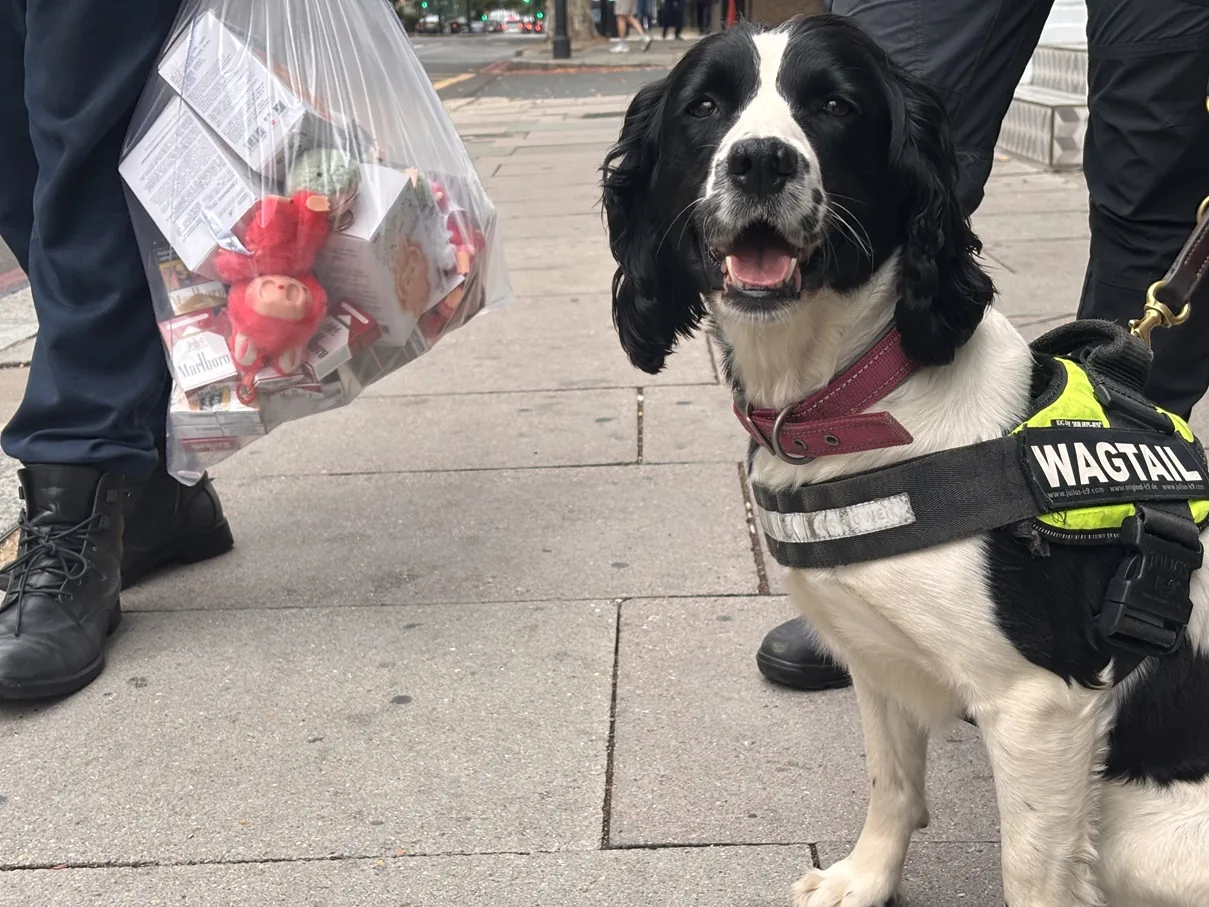

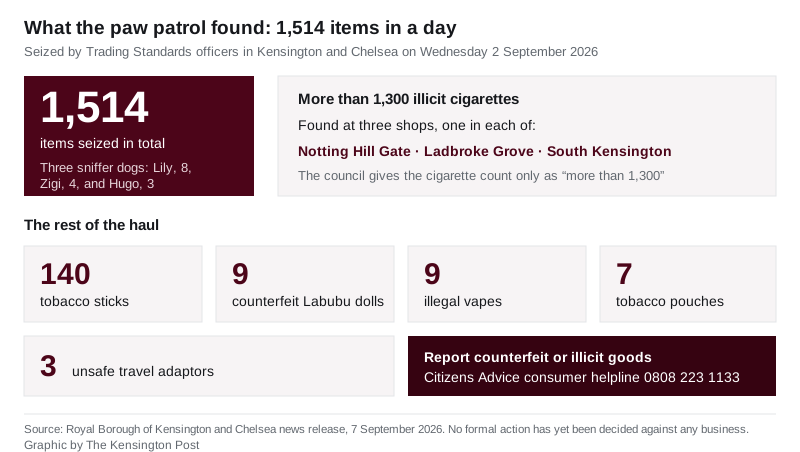
Three spaniels worked shops in Notting Hill Gate, Ladbroke Grove and South Kensington on 2 September: 1,514 items taken, and no formal action decided yet.
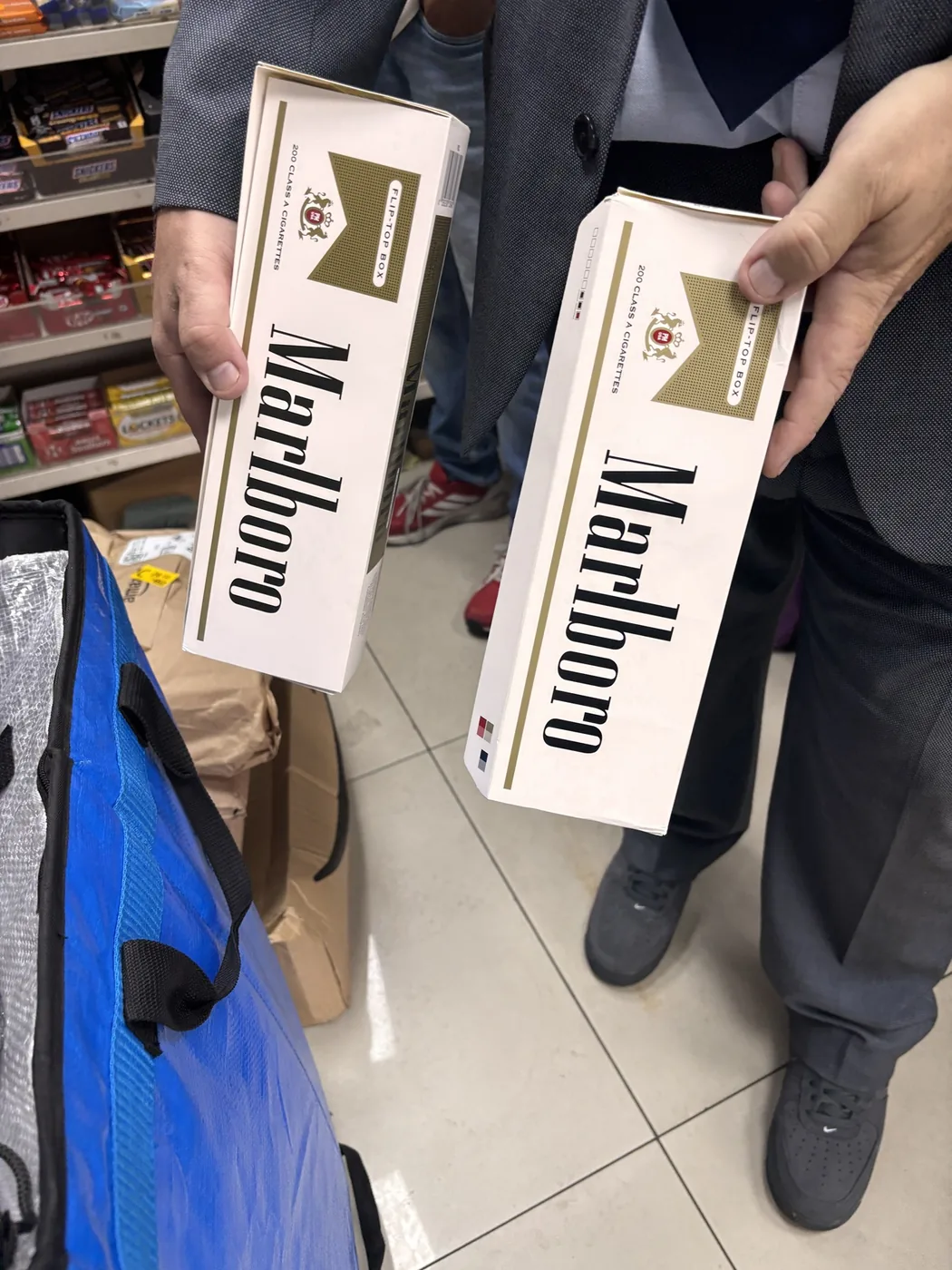
Three spaniels spent Wednesday 2 September going through shop back rooms in Kensington and Chelsea, and by the end of the day Trading Standards officers had taken away 1,514 items. More than 1,300 of them were illicit cigarettes, found at three shops, one each in Notting Hill Gate, Ladbroke Grove and South Kensington.
The dogs are Lily, eight, Zigi, four, and Hugo, three. They worked alongside the council’s Trading Standards officers on visits to businesses suspected of selling illicit tobacco, and the council has published the operation along with the photographs on this page.
No business has been named, and nothing has been decided. The council’s communications team told the Kensington Post that “our officers are now working through the evidence to decide on the formal action to be taken”. Its published statement puts it the same way: officers are considering what formal action is appropriate, and businesses found selling counterfeit or illicit goods can face further investigation and prosecution.
What came out of the shops
Cigarettes were the bulk of it, but not all of it. Alongside the tobacco, officers took 140 tobacco sticks, nine illegal vapes, seven tobacco pouches, three unsafe travel adaptors and nine counterfeit Labubu dolls.
The arithmetic is worth being straight about. The council gives the cigarette count only as “more than 1,300” and the total as 1,514, so the precise number of cigarettes is not published. Everything else in the haul is itemised exactly.
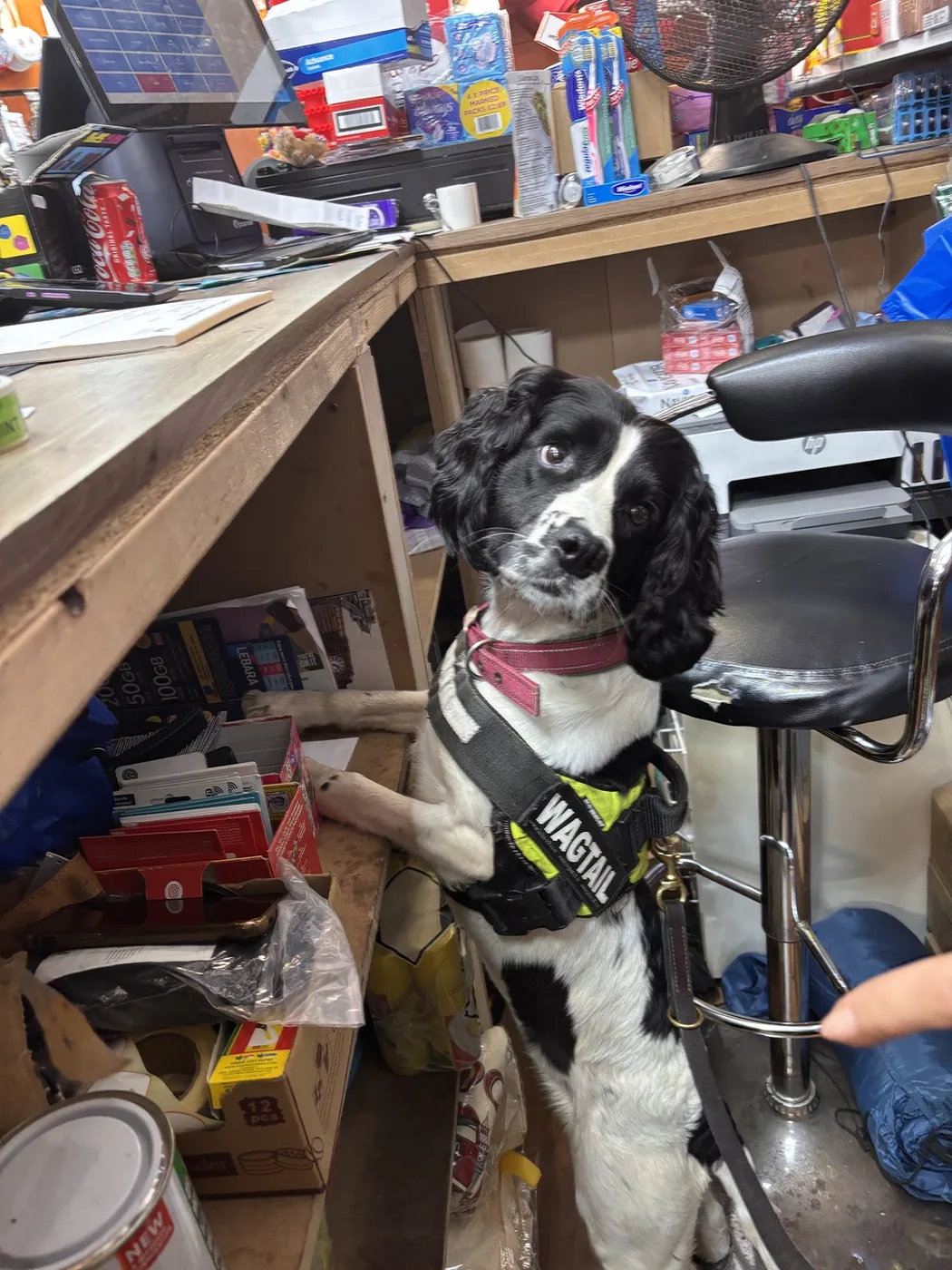
A detection dog is used because illicit tobacco is rarely on the shelf. The photographs the council sent us show a dog with its front paws up on a stock shelf behind a counter, working through boxes, cans and packaging stacked in the gap between the till and the back wall.
“Not a victimless trade”
Cllr Johnny Thalassites, the council’s lead member for resident services, planning and enforcement, said the dogs “did a brilliant job sniffing out goods that shouldn’t have been on our streets”, and that “there is a serious point behind this paw patrol”.
“Illegal tobacco isn’t a victimless trade. Residents should be able to trust that what they are buying is genuine and safe, while honest businesses shouldn’t have to compete with people who don’t play by the rules.”
He added that the council “will keep using intelligence, targeted inspections and every tool available to us to track down illicit goods and take swift and decisive action against those who put profit over safety”.
The operation behind it
The visits were part of Operation CeCe, which the council describes as a joint initiative involving the council, HMRC and National Trading Standards to tackle the illegal tobacco trade. The council does not say which premises were visited beyond the three areas, or how the shops were selected, beyond Cllr Thalassites’ reference to intelligence and targeted inspections.
What it means for you
The practical point is the one Cllr Thalassites makes: residents should be able to trust that what they buy is genuine and safe. The same day’s visits that turned up cigarettes also turned up three travel adaptors the council describes as unsafe and nine vapes it describes as illegal, so this is not only a tobacco question.
If you run a shop here, the enforcement is not theoretical and it is not announced in advance. Three premises were searched on one day, and the council says it will keep using targeted inspections.
To report counterfeit or illicit goods, the council directs residents to the Citizens Advice consumer helpline on 0808 223 1133.
This is the second enforcement push the council has publicised in the borough in a matter of weeks, after its patrols against illegal street trading, which issued 12 fines of £150 in a single week.
Sources: Royal Borough of Kensington and Chelsea, “Paw patrols help officers sniff out illicit goods”, published 7 September 2026, and information and photographs supplied to the Kensington Post by the council’s communications team on 9 September 2026.
Have your say